

Heat, Light, and the Bathroom Cabinet

Most people keep their herbal supplements in exactly the two worst spots in the house, the bathroom cabinet and the windowsill over the kitchen sink, because both are where they remember to take them.
By Jonathan Brooks
That is not a knock on anyone's habits. It is just how memory and routine actually work, and it explains almost every badly stored bottle of capsules or oil in America. The problem is that the two most rememberable spots in most homes are also the two spots that do the most to age a botanical product before its time.
The short version
Heat, humidity and light are the three things that actually age a herbal supplement, not time on the shelf by itself.
The bathroom cabinet delivers heat and humidity from every shower. The kitchen windowsill delivers direct light and heat swings.
An expiry date on a botanical product is a promise about potency, and most people read far more into it than that.
Capsules, oils and water based sprays or mists age differently and want slightly different spots.
A good storage spot you actually use beats a perfect one you forget.
Why the cabinet and the windowsill are the two worst spots in the house
A bathroom cabinet is a small enclosed box that gets blasted with hot, wet air every single day, sometimes twice. Even with the door shut, steam finds its way in around the hinges and the medicine cabinet mirror.
Humidity is the enemy of anything dry, and a capsule, a powder, or a dried botanical is dry by design.
A kitchen windowsill above the sink solves a different problem and creates a worse one. Sunlight streams straight through a clear bottle, and the glass in front of the pane can turn that windowsill into one of the warmest spots in the kitchen by midafternoon.
None of this is exotic chemistry, though it explains most of the ordinary wear and tear.
Heat speeds up nearly every chemical reaction inside a bottle, humidity invites moisture into a capsule that was never built to get wet, and light breaks down some of the very plant compounds a botanical product is valued for in the first place.
None of that turns a bottle in either spot into a lost cause. It means the product inside is working a little harder against its own environment than it needs to.
What that date on the bottle is actually telling you
Almost every supplement carries a printed date, usually a best by or expiry date stamped near the barcode. Shoppers tend to read it the way they read a date on a carton of milk, as a hard line between fine and spoiled.
That is rarely what the date is measuring. For most dry, shelf stable botanical products, that date marks how long the maker is willing to stand behind the numbers printed on the label, which is a narrower question than what is happening chemically inside the bottle.
An expiry date on a botanical supplement is typically the point through which the maker stands behind the label's potency.
Whatever your own bottle prints is the number that actually applies to what is in your hand, and it is worth glancing at once when a bottle is new rather than guessing later.
Store bought or handmade, the rule of thumb holds. A dry, sealed, cool and dark container ages more slowly than the same product left open in a warm, bright one, regardless of what the calendar says.
Capsules, oils, and water based formats do not age the same way
Ojaska's own lineup covers most of the shapes a botanical product actually takes at home. There are capsules, among them Ashwagandha, a root used in Ayurveda, the traditional system of health and daily living from the Indian subcontinent, and Triphala, a blend of three dried fruits, alongside Curcumin, Berberine, Moringa and Melatonin. There is also an external oil, a throat spray, a rose mist, and a set of drops. Each format has a different weak point, and it is worth knowing which one you are dealing with.
1. Capsules and powders
A capsule is dry by design, and its main enemies are moisture and light rather than heat alone. A humid bathroom can soften a gelatin or vegetable capsule shell and leave the powder inside it clumping, which is the visible sign that the air around the bottle has been doing something. Keep capsules somewhere dry and out of direct sun and they will generally hold their condition better than the same bottle kept in a steamy cabinet.
2. Oils
Plant based oils oxidize when they meet heat, light and air together, the same way a bottle of olive oil goes rancid faster left open by a stove than sealed in a cool cupboard. Ojaska's Pain Relief Oil is an external use product, meant for massage and self care rather than anything taken internally, and like any oil it benefits from a cap that is actually closed and a spot that stays relatively cool.
3. Water based sprays and mists
Kavach Spray and Petal Dew Rose Mist are water based. Golden Nectar Drops are built on plant oils in an approved base, so they behave more like the oils above than like the sprays. Water based formulas are generally the most sensitive to warmth, and a cool spot matters more here than it does for a dry capsule. Petal Dew Rose Mist is external use only, misted onto body or skin as desired. As with any of these, your own bottle's label is what to follow.
The honest compromise: a good spot versus a spot you actually use
Here is where the advice usually gets impractical. Plenty of guides will tell you to store supplements in a cool, dark, climate controlled cupboard, and technically that is correct. It is also a spot most people will visit twice before forgetting it exists.
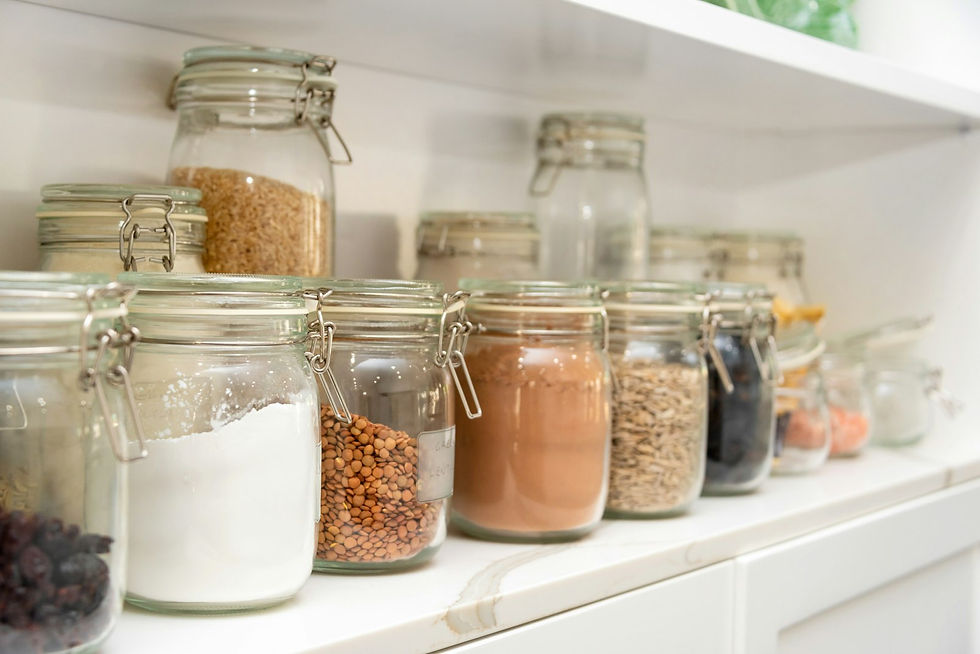
Honestly, I would rather see a bottle sitting on a cool bedroom dresser or a kitchen cupboard shelf that a person actually opens every day than perfectly stored somewhere out of sight and out of mind. A slightly faster loss of potency from an imperfect spot matters far less than a bottle nobody ever takes.
A bedroom dresser drawer, a kitchen cupboard shelf away from the stove, or a hallway linen closet all beat the bathroom cabinet and the sunny windowsill without asking you to change your whole routine. Pick the one closest to wherever your hand already goes at the same time each day, whether that is right after brushing your teeth or right before your morning tea. For more on building that kind of routine around when and how a botanical product actually gets taken, our piece on what to take herbs with covers the other half of the habit.
Judging whether a supplement label is a straightforward one is a separate question worth answering first. Our guide to reading an Ayurvedic supplement label walks through what a straightforward label actually says, and how to spot a vague one before it ever reaches your cupboard shelf.
Building a routine that keeps up with the bottle
A few habits do more for a supplement's staying power than any single storage spot:
Keep the cap on and closed between uses rather than left loose. Every open minute is a minute of air, humidity and sometimes light getting in.
Buy what you will use in a reasonable window. Bottle math is simple: one capsule twice daily runs through a bottle in about a month, one capsule daily takes about two months, so most people are not actually storing anything for a year regardless of the spot.
Move it if the spot changes. A cupboard near a stove gets warmer in the process of everyday cooking than most people notice.
Glance at the printed date when a bottle is new, not months later when you are trying to remember it.
Someone just starting a capsule routine for the first time, including anyone working through our guide to how to actually take Ashwagandha, benefits from picking the storage spot on day one rather than defaulting to whatever cabinet happens to be closest at the time.
None of this needs to be complicated. Heat, humidity and light are the three things actually working against the bottle, and almost any spot that avoids all three, sitting somewhere you will actually visit, beats the two spots most people default to without thinking.
These statements have not been evaluated by the Food and Drug Administration. This product is not intended to diagnose, treat, cure, or prevent any disease.


Comments