

Warm, Sipped, and Not From Plastic: How Ayurveda Says to Drink Water

Every hydration app on a phone counts ounces. None of them ask what temperature the water was, what it was kept in, or what time of day it went down.
By Jonathan Brooks
Ayurveda, the traditional medical system of the Indian subcontinent, spends comparatively little time on volume and a great deal of time on those other three questions. That is not a minor cultural quirk. It is close to the entire argument.
The short version
Ayurveda cares less about how much water you drink and more about how, when and out of what.
Ushnodaka is water that has been boiled and cooled to a warm drinking temperature, a common way to start the day.
Warm water is generally favored over iced, based on how digestion is described in this system.
Sipping in small amounts through the morning is the traditional pattern, not one large volume at once.
Water is usually taken before or after a meal rather than as a full glass alongside it.
Copper and clay are the traditional vessels, and the modern claims made for copper run ahead of what is established.
What ushnodaka actually is
Ushnodaka simply means warm water, water that has been brought to a boil and then allowed to cool to a drinkable warmth rather than served hot or iced. The boiling itself is regarded as doing something to the water, and the cooling afterward is just as deliberate. It is not tea and carries no herbs unless a specific formula calls for them. It is the plainest possible preparation, made specific only by temperature and by when it gets used.
The habit shows up most often first thing in the morning, on an empty stomach, before food or coffee. A cup of ushnodaka on rising is one of the more commonly repeated pieces of Ayurvedic daily practice, alongside routines like tongue scraping and self massage that tend to get more attention. Where this fits inside the rest of the morning, and the order of everything else in the day, is its own dedicated subject elsewhere on this site. Water rarely gets the same billing as those other habits, probably because it looks like nothing is happening.
Why warm instead of iced
Ayurveda describes agni, the Sanskrit term for digestive fire, as the body's capacity to process what it takes in, something that can be supported or worked against by what arrives in the stomach. Cold water is generally described as working against it in the moment it is consumed, while warm water works with it instead.
The tradition regards icy water as a small task for a system that already has a large one, which is why it favors warm over cold instead of assuming temperature does not matter.
This is a traditional description of how the body responds, not a clinical claim, and Ayurveda never needed a laboratory to think this way. Cold water on an empty stomach was simply understood as asking agni to do two things at once instead of one.
How the habit actually works
1. Warm, not iced
Water is boiled, then cooled to a warmth closer to a hot drink left to sit for a few minutes than to water straight from the tap. Some households keep a thermos going through the day rather than reheating cup by cup.
2. Sipped, not gulped

A full glass finished at once is the default western pattern, drunk fast once thirst finally gets loud enough to notice. Ayurveda works against that pattern on purpose.
Small sips spread across the morning are easier for agni to work with than one large volume swallowed in a hurry.
3. Around meals, not during
Water taken well before a meal, or some time after, is preferred to a full glass alongside the food. A few sips during a meal to help things along is handled differently from finishing a full glass with the last bite. Vata (the air and movement type), Pitta (the fire and intensity type) and Kapha (the heavy, steady type), the three constitutional types Ayurveda uses to describe a person's baseline tendencies, all get roughly this same guidance, though Pitta types, who run hot and sharp by nature, are sometimes told to be more careful with iced drinks specifically.
The vessel tradition, and where the internet oversells it
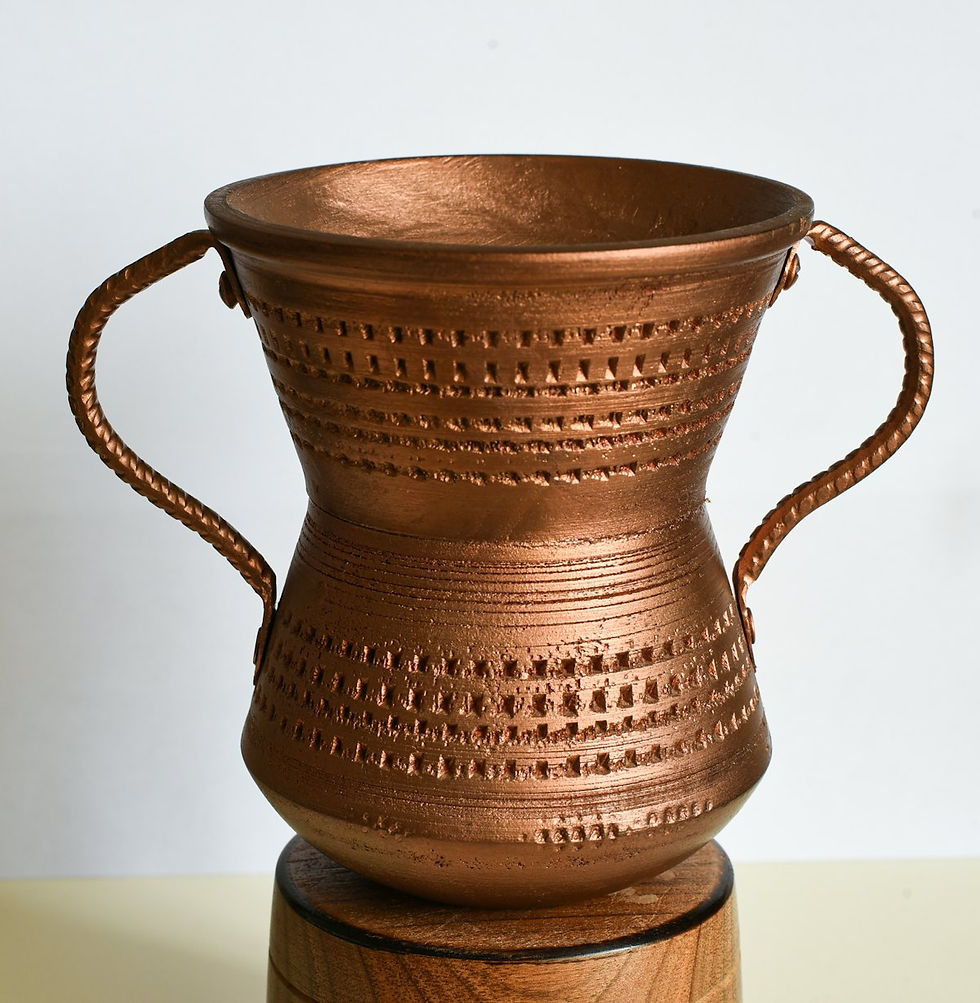
Copper comes up constantly in Ayurvedic daily routine content, usually attached to a claim that it kills bacteria, purifies water, or adds minerals the body needs. That is the part of the whole subject where modern marketing has run well past what the tradition ever claimed.
The tradition holds that water rested overnight in a copper vessel takes on a quality worth drinking, and that claim stops well short of sterilizing a water supply.
The practice is specific about timing. It is the overnight rest, water left standing in the vessel from evening through morning, that the tradition ties to that improved quality, not a few minutes of contact before pouring. A cup filled from a copper vessel and drunk right away is not really practicing the habit at all, any more than water gulped straight from the tap is practicing ushnodaka. The same logic applies to both: preparation and time matter as much as temperature or container, and no single element does the work alone.
Clay carries a parallel tradition, particularly for water meant to stay cool without refrigeration. Glass, steel, copper and clay share one advantage that has nothing to do with any of those disputed claims: none of them is a disposable bottle finished once and thrown away.
Ayurveda also recognizes anupana, the substance a remedy is taken with, as its own subject with its own rules, and warm water is one of the most common anupana in the system. If you want the fuller picture of how that pairing works, Anupana, the part of the dose nobody talks about covers it directly. The habit of warm water on rising also sits inside a larger pattern of how agni is approached across a whole day of eating, which eating for your dosha, dosha being Ayurveda's term for a constitutional type, covers from the meal side rather than the water side.
Where this leaves the morning glass
None of this requires a special cup or an expensive habit change. It requires noticing what temperature the water usually is, and whether it goes down in one gulp or several sips across a morning. Ojaska's own approach to the Ayurvedic day, the herbs, the timing and the pairing, is built on the same plain daily habits, and water is the plainest one of them. Honestly, out of everything in daily Ayurvedic practice, the water habit is the one I think gets dismissed too fast for being too simple to matter.
These statements have not been evaluated by the Food and Drug Administration. This product is not intended to diagnose, treat, cure, or prevent any disease.


Comments