

Tagar: the root Ayurveda reaches for when the evening will not settle

There are two plants sold as valerian, and only one of them is the root that Ayurveda, the traditional medicine of the Indian subcontinent, has used for centuries.
By Jonathan Brooks
Most shoppers never learn that. A bottle says valerian, the shelf card says calming, and that is where the label reading usually stops. The two valerians are not interchangeable just because English flattened them into one word.
Valerian is a common name applied to more than one plant, the way brahmi is applied to more than one plant.
The short version
Tagar is the Sanskrit name Ayurveda, the traditional medical system of the Indian subcontinent, uses for Indian valerian.
Tagar refers specifically to Valeriana wallichii, a species that grows in the Himalayan region, not the Valeriana officinalis sold in most Western herbal aisles as valerian.
The two plants belong to the same genus but are botanically distinct species with their own separate traditional histories.
Classical Ayurvedic texts rarely used Tagar alone. It shows up paired with other herbs far more often than as a single extract.
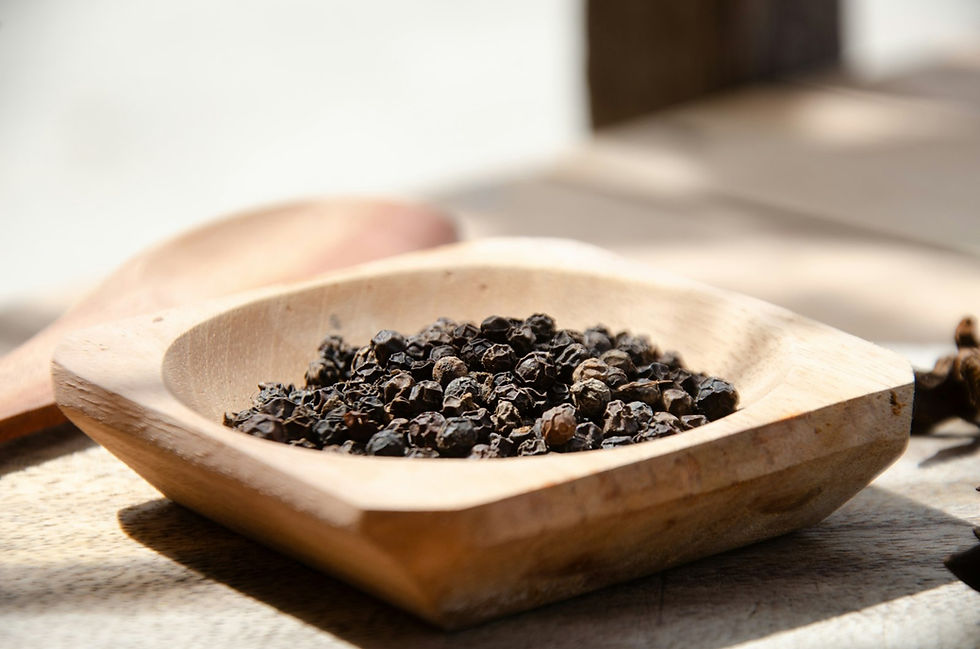
The smell is part of the identification. Dried valerian root of either species carries a strong, sharp, almost cheeselike odor that surprises people expecting something floral.
Ojaska's Melatonin blend lists Indian Valerian, Tagar (Valeriana wallichii) at 200 mg, alongside Ashwagandha (Withania somnifera), Bacopa, and Holy Basil, one capsule in the evening, preferably near bedtime.
Two valerians, one shelf label
Valeriana officinalis is the valerian most Americans picture, the one that grows across Europe and has been studied and sold in the West under that name for generations. Valeriana wallichii is a separate species. It has its own range, its own traditional record, and its own name in Sanskrit: Tagar. The two plants are close botanical relatives, similar enough that a supplement label can get away with printing valerian and letting the reader assume a single, unified thing exists behind the word.
It does not. A label that says only valerian is doing the same thing a label that says only brahmi does: naming a category rather than a species, and asking the reader to fill in the rest. Read our full walkthrough on reading an Ayurvedic supplement label if this is the first time that pattern has come up for you, because it recurs across the whole traditional herb aisle, not just here.
Tagar is the word to look for if the traditional Ayurvedic lineage actually matters to you. Valeriana wallichii (Tagar), printed together, is a label doing more work than valerian alone ever will.
Sharing a genus is part of why the confusion took hold so easily in the first place. Valeriana officinalis and Valeriana wallichii sit close enough on the botanical tree that early translators moving between languages had a genuinely reasonable excuse for regarding them as one plant with two names. A modern label has no such excuse. The Latin binomial has existed for both species for a very long time, and printing it costs a manufacturer nothing beyond a bit more room on the ingredient panel.
Valeriana wallichii, and where it actually grows
Valeriana wallichii is native to the Himalayan region, growing at altitude on cool, often exposed slopes rather than in the lowland meadows where its European cousin is more typically found. That range is part of why classical Ayurvedic texts, composed in the Indian subcontinent, had access to this particular valerian and built a traditional record around it specifically, distinct from whatever European herbalism was doing with its own local species on the other side of the world.
Altitude changes more than scenery. A plant growing on an exposed slope faces harsher sun, thinner soil, and a much wider swing between day and night temperature than one growing in a sheltered lowland meadow, and root chemistry in general tends to respond to that kind of stress. None of that is a claim about Tagar's specific chemistry, which is a question for a lab rather than a blog post. It is simply a reminder that where a root actually grew is not incidental detail. It is part of what a traditional name like Tagar was always pointing to.

The smell nobody warns you about
Dried valerian root has a smell that catches people off guard. It is sharp, earthy, and faintly like aged cheese, a compound called isovaleric acid doing most of the work. Anyone who has handled the raw dried root of either species knows the smell before they know anything else about the plant. It is not a flaw. It is simply what this root smells like, and a bottled capsule spares the swallower from ever noticing.
Honestly, I think that smell is part of why Tagar shows up in blends rather than on its own on most Western shelves. A strong smelling raw root does not photograph well for marketing, so it tends to disappear into a formula where nobody has to describe it.
Why Ayurveda pairs it rather than isolating it
Classical Ayurvedic formulation rarely reached for a single herb in isolation the way a modern single ingredient capsule does. A rasayana, the broad traditional term for a restorative preparation, was far more often a combination, several herbs working alongside each other rather than one compound carrying the whole formula. Tagar fits that pattern. It shows up in traditional combinations more often than it shows up alone, working alongside other herbs from within the same broad category of restorative, calming preparations.
That combination approach is not an accident of old recipes running short on ingredients. It reflects how the classical texts framed doshas, the three constitutional patterns Ayurveda uses to describe a person's tendencies, particularly Vata, the pattern most associated with restlessness and an unsettled evening.
A single herb addressing one facet of an imbalance was considered less complete than several herbs addressing it from more than one angle at once.
Where Tagar shows up on a modern label
Look for the Latin binomial, the same rule that applies to every other confusingly named herb on a shelf. Valeriana wallichii next to the word Tagar, or next to valerian, tells you unambiguously which species is inside. Valeriana officinalis tells you the other one is. Neither species is better or worse on the label; they are simply different plants.
A label that only says valerian with no binomial attached has not actually told you which one you are holding.
A milligram weight is the second thing worth checking. A named amount next to Tagar or Valeriana wallichii gives you something concrete to compare against other ingredients on the same label, the same principle covered in more depth in our guide to reading virya and vipaka on an herb label, where species identity and traditional classification both turn out to matter more than the common name ever does.

Tagar in the Ojaska line
Tagar appears in our Melatonin blend, where the label lists Indian Valerian, Tagar (Valeriana wallichii) at 200 mg alongside Ashwagandha (Withania somnifera), Bacopa, the botanical name for what much of the market still calls brahmi, and Holy Basil, also called Tulsi. The suggested use on the label is one capsule in the evening, preferably near bedtime. The traditional dosha fit carried on this formula is Vata, the constitutional pattern our Vata dosha guide covers in full, useful background if evening restlessness is what brought you to this page in the first place, alongside our broader look at autumn restlessness and why the season itself tends to stir Vata up.
The species name in parentheses is the part doing the real work on that label. Anyone can print valerian. Printing Valeriana wallichii next to Tagar is a small, specific commitment to naming the actual plant, and it is the same commitment we make across the rest of the line, whether the word in question is brahmi, ashwagandha, or Tagar.
The next time a label just says valerian and stops there, you know what two words to look for underneath it, and which Himalayan root Ayurveda has actually been calling Tagar all along.
These statements have not been evaluated by the Food and Drug Administration. This product is not intended to diagnose, treat, cure, or prevent any disease.


Comments