

Nirgundi: the leaf Ayurveda wrapped around a sore shoulder

Most herbs in a joint formula got there through the digestive route. This one got there after a few centuries of being warmed and tied on.
By Jonathan Brooks
Boswellia and turmeric are digestive herbs first, the kind the tradition took by mouth long before anyone thought to isolate a single compound from either one. Nirgundi, the Sanskrit name most often used for Vitex negundo, arrived at the same ingredient list from close to the opposite direction. Households across India kept a shrub with slender leaflets growing near the door for one main reason, and swallowing it was rarely that reason.
The leaf was warmed, pressed against a stiff joint or a sore shoulder, and left there.
The short version
Nirgundi is the Sanskrit name most commonly used for Vitex negundo, a shrub also called the five leaved chaste tree.
Its classical record leans heavily external: warmed leaves, poultices and pastes applied to the skin rather than swallowed.
The plant grows easily near homes and along field edges across much of India, with no formal cultivation required.
A modern formula can list the same plant as a small internal ingredient, which is a genuinely different route into the body.
Ojaska Joint Ease includes Nirgundi at 15 mg in its ingredient list, alongside several other traditional joint herbs.
Ojaska frames Joint Ease as a daily mobility and routine formula, taken on a set schedule rather than reached for once.
The plant that grew by the door in village India
A shrub this common rarely gets written up. Vitex negundo grows fast, tolerates poor soil, and turns up along fences, roadsides and the edges of cultivated fields across South Asia. Getting hold of it never required a trip to a market or an apothecary. Someone walked outside, cut a few leafy stems, and carried them back to the kitchen fire to warm through.
Plenty of households went a step further and planted it on purpose, usually as a loose hedge near the entrance rather than as a single showcase plant. A shrub that could be cut back hard and would simply grow again within a season made more sense at the edge of a working household than something delicate that needed tending. That practical relationship, a plant kept close because it earned its place rather than because it was admired, runs through a lot of traditional herb use that never made it into a modern supplement aisle.
That easy access shaped centuries of use. Classical Ayurveda, the traditional medical system of the Indian subcontinent, describes Nirgundi mainly in external preparations rather than as something taken internally, and a plant this close at hand did not need the kind of formal supply chain an imported resin or a rare root would.
The bundled, warmed leaf pressed against a stiff area is close to the same basic idea behind Kizhi, the herbal poultice massage still practiced at wellness centers today, even though Kizhi typically works with a different mix of leaves, herbs and rice rather than Nirgundi specifically.

Vitex negundo, and the names it travels under
One plant carrying several names is fairly normal for an Ayurvedic herb. Vitex negundo is the Latin binomial, the name that points to exactly one species no matter the region or the language. Nirgundi is the Sanskrit name most widely used in the classical texts and in the modern supplement trade. English speakers often call it the five leaved chaste tree, a reference to its palmate leaf shape, five slim leaflets spreading from a single point, though the leaflet count on an actual plant can run anywhere from three to seven.
Regional names multiply from there. Sambhalu shows up across parts of North India, and several other local names exist in different states and languages. None of them are wrong exactly. They describe the same shrub from a different linguistic tradition, which is close to the same pattern our guide to virya and vipaka runs into, two classical Sanskrit terms that describe an herb's traditional properties rather than settle on one universal name for it.
Botanically, Vitex negundo sits in the same family as mint, rosemary and sage, a family better known in the West for kitchen herbs than for a shrub tied on a joint. That family relationship is a botanical fact rather than a functional one. It says nothing about what the plant does, only where it sits on a family tree that happens to include a lot of familiar kitchen plants.
A herb with an external record first
The classical texts are fairly consistent on this point. Nirgundi's traditional uses lean heavily external: leaves warmed over a low flame and tied against a stiff or aching area, oil infused with the leaf and worked into the skin, and pastes made from the crushed leaf applied directly on the spot.
Someone tying a warm leaf bundle over a sore shoulder after a long day in the fields is the picture the classical record actually preserves.
A smaller internal record exists alongside that external one, decoctions and oils taken by mouth in a handful of classical formulas, but the weight of the historical use clearly favors the skin over the stomach. Our piece on cold mornings and stiff joints covers the seasonal pattern this kind of external application was traditionally reached for, mornings when a joint feels tight before the body has had a chance to warm up on its own.

How a poultice herb becomes a capsule ingredient
Getting from a warmed leaf bundle to a 15 milligram line on a label is a genuinely different question than what the herb was traditionally for. A modern extraction process concentrates specific compounds from the leaf and measures a set amount into a capsule meant to be swallowed, a route of entry the classical external tradition never really described. Honestly, I think it is easy to assume that an herb's traditional method of use carries over automatically to whatever modern format it later gets put into, and Nirgundi is a clean example of why that assumption deserves a second look. A leaf tied on skin and a compound measured into a capsule are related by species, not by method.
Reading a label that lists Nirgundi at a small milligram weight is worth doing the same way our guide to reading an Ayurvedic supplement label recommends for every line on a panel, checking the amount actually printed so you know precisely what the formula in your hand contains.
Where Nirgundi sits inside a blend
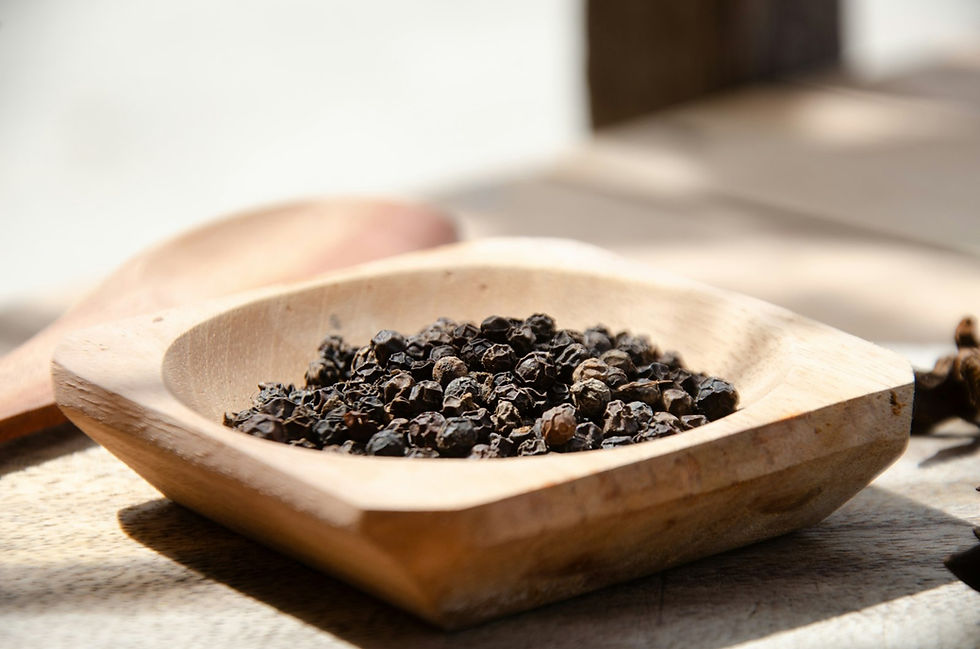
In the Ojaska line, Nirgundi shows up inside Joint Ease, not on its own. The label lists it at 15 mg, alongside Boswellia Extract at 250 mg, Turmeric at 100 mg, Guggul at 75 mg, Ashwagandha, a root long used in Ayurvedic formulas, at 40 mg, Ginger at 10 mg and Black Pepper at 10 mg, one capsule taken twice daily after meals. That combination sits within doshas, the three constitutional patterns Ayurveda uses to describe how a person tends to respond to food, season and routine. Joint Ease is built primarily around Vata, the pattern associated with movement and dryness, with support for Kapha, the pattern associated with structure and stability. Readers new to what a dosha pattern actually describes can start with our Vata guide.
That is a daily mobility and routine formula, taken on a regular schedule rather than reached for only on the one stiffest morning, and Nirgundi is a single ingredient inside a wider combination rather than the whole story on its own.
The next time a joint formula label lists an unfamiliar name in small print near the bottom, Nirgundi included, it is worth asking the question this whole shrub raises: where did the tradition actually use this, and does the modern format still resemble that use at all.
These statements have not been evaluated by the Food and Drug Administration. This product is not intended to diagnose, treat, cure, or prevent any disease.


Comments