

The Sweet Season That Starts Now and Does Not Stop Until January

The heavy eating season does not begin at a holiday. It starts quietly in late October and simply does not let up again until the calendar turns to January.
By Jonathan Brooks
Twelve weeks is a long stretch to spend either white knuckling a rich table or feeling vaguely guilty about sitting at one. Ayurveda, the traditional medical system of the Indian subcontinent, has a genuinely useful amount to say about a season built around sweetness and shared meals, and almost none of it is about staying away from the table. It is about sequencing, timing, and what sits at the edge of a rich plate, which turns out to matter more than whether the plate itself is rich at all.
The short version
Here is the short version before the full case for it.
The heavy eating season runs roughly twelve weeks, not one evening.
Madhura rasa, the sweet taste, is one of six tastes the tradition builds a meal around, not a lapse to apologize for.
Order and timing matter more than restriction: what comes first, what comes last, and how long a gap sits between meals.
Certain foods and spices are traditionally set beside a rich meal specifically because the meal is rich.
Agni, the digestive fire, is the variable worth watching through a loud season, not a number on a scale.
One steady habit carried through all twelve weeks does more than a hard reset in January ever will.
Twelve weeks, not one evening
One festival becomes the next before the first has really finished. A gathering in late October gives way to a longer one in November, which gives way to a string of year end dinners that run through the last week of December and often into the first days of a new year. The stretch runs longer than any single dinner does, and regarding it as one evening, one indulgence, one thing to recover from, misses the actual shape of the problem, which is closer to three straight months than three separate nights.
Ayurveda never organized itself around single evenings anyway. It organized itself around ritucharya, the seasonal regimen that shifts diet and daily habit with the calendar, and a twelve week stretch of richer food sitting inside that calendar is not an anomaly to the tradition. It is a season like any other, with its own logic.
A season this long was never going to be managed by willpower alone.
Sweet is a taste the tradition actually likes
Madhura rasa, the sweet taste, one of six flavors Ayurveda uses to describe food, is not regarded as a vice in the classical texts. It is described as building and grounding, the taste most associated with nourishment and with the tissues of the body, which is a very different starting point than the one most modern eating advice hands a person every November.
The tradition is not quietly disappointed in a plate of something sweet.
That does not mean unlimited sweetness at every meal carries no weight. It means the tradition's actual objection was never to the taste itself, it was to a body that can no longer register when enough sweetness has arrived, which is a question about agni, the digestive fire, rather than a question about virtue. Agni, the digestive fire Ayurveda weighs before almost any other factor, is the thing actually working overtime for twelve straight weeks, not the sweetness on its own.

Order, timing and the gap between meals
Classical guidance leans toward the heaviest meal of the day sitting near midday, when agni is traditionally considered strongest, with lighter food later once that fire has settled. A season full of evening dinners runs directly against that pattern, which is worth naming honestly rather than pretending a heavy dinner at nine at night behaves the same way a heavy lunch at noon does.
The gap between meals matters just as much as their order. A grazing pattern, a plate here and a plate there with no real space between them, never gives agni room to finish one job before the next one starts. A cleaner gap between meals does more for a heavy season than cutting any single dish ever will, and it costs nothing to try. The plate Ayurveda actually builds for this time of year already leans warm and moist rather than raw and cold, which is a season long habit rather than a once a week fix, and it sits underneath every one of the richer meals stacked on top of it.
What goes around a rich meal
A rich meal was traditionally never served alone. Warming spices, a small measure of ghee, a pinch of something pungent, these sit beside sweetness in classical formulation for a reason, and the reason is digestive rather than decorative. Cooked food carries its own advantage here too, since a body already working through a stack of rich meals gets less help from a cold raw plate stacked on top of them than it does from something already partly broken down by heat.
A small handful of dried fruit or nuts set beside a rich plate, rather than a second full serving of the plate itself, is doing a genuinely different job. It rounds a meal out without asking agni to process another whole course on top of the first one.

Sequencing this way is not a trick and it is not a diet. It is closer to what a household cook already knows without naming it: a rich dish rarely arrives without something beside it that makes the richness easier to sit with.
Keeping one steady habit through a loud season
Honestly, I think the annual cycle of regarding a festive season as damage to be undone in January gets the whole problem backward. Twelve weeks of richer eating is not an emergency that a week of juice and restriction in the new year quietly repairs.
It is a season, the same as any other, and the tradition's actual answer to a season is a steady habit that runs underneath it, not a punishment that runs after it.
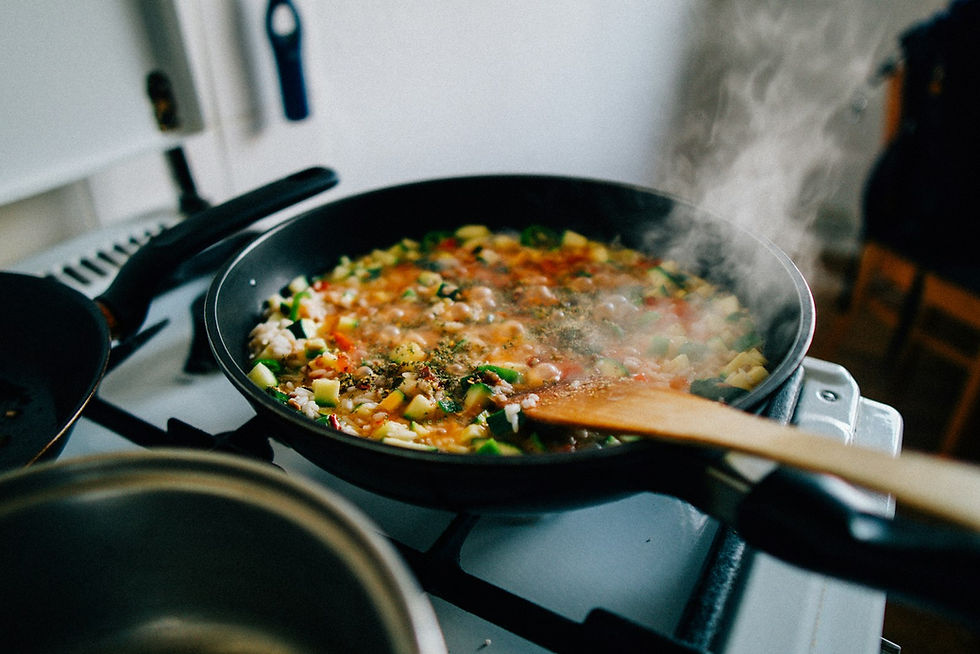
Kitchari, the plainest dish the tradition keeps returning to, is that steady habit for a lot of households. It is not a cleanse and it was never meant to undo anything. It is simply the ordinary Tuesday dinner that sits between the richer Saturday ones, giving agni a plain, easy night often enough that the loud nights do not have to carry the entire season by themselves.
Where Ojaska fits
Berberine, from Berberis aristata, sits in Ojaska's Gut and Metabolic collection alongside Triphala, a three fruit formula, and Moringa. The label is one capsule daily after meals, a Berberis aristata extract at 500 mg, and the dosha (the constitution type Ayurveda sorts a body by) fit runs toward Pitta (the fire and transformation constitution) and Kapha (the earth and water constitution), the two constitutions a long, heavy, sweet season leans on hardest. Daruharidra is the plant's actual traditional name, and it is worth knowing the difference between the herb and the compound isolated from it, since the two get confused constantly.
A season built around richer, sweeter food naturally tips toward Kapha qualities: heavier, slower, more inclined to sit still than move. What Kapha actually is matters more in November and December than in almost any other stretch of the year, which is exactly why the steady habits above, warm cooked food, real gaps between meals, one plain dinner running underneath the rich ones, carry more weight now than they would in a lighter season. Ojaska's part in that is straightforward: a capsule that carries its composition and its schedule plainly on the label, easy to keep going through twelve weeks that ask a great deal of everything else.
These statements have not been evaluated by the Food and Drug Administration. This product is not intended to diagnose, treat, cure, or prevent any disease.


Comments